 LANGUAGE
  English
 русский
 Español

Content
- 1 Cast Aluminum Outdoor Furniture: The Short Answer First
- 2 How the Aluminum Casting Process Shapes Furniture Quality
- 3 Cast Aluminum vs Extruded Aluminum vs Wrought Iron
- 4 Alloy Grades: Why A356 and ADC12 Aren't the Same Metal
- 5 Powder Coating and Finish Technology That Actually Holds Up
- 6 Durability by the Numbers: What to Expect Over Time
- 7 What's Changing in Cast Aluminum Furniture Design for 2026
- 8 Common Cast Aluminum Furniture Types and What They're Suited For
- 9 Matching Cast Aluminum Furniture to Your Climate
- 10 Real Maintenance: What Cast Aluminum Furniture Actually Needs
- 11 Cost Per Year: Why the Higher Sticker Price Often Wins
- 12 A Practical Checklist Before You Buy
- 13 Frequently Asked Questions
- 13.1 Does cast aluminum outdoor furniture rust?
- 13.2 Is cast aluminum furniture heavy enough to stay put in wind?
- 13.3 Can cast aluminum furniture stay outside all winter?
- 13.4 What's the difference between cast and wrought aluminum?
- 13.5 Why does cast aluminum furniture cost more than resin or basic metal sets?
- 13.6 How do I clean cast aluminum furniture safely?
- 13.7 Is cast aluminum furniture safe to use around a pool with chlorine?
- 13.8 Can scratches in the powder coat be repaired at home?
- 13.9 Does cast aluminum furniture get too hot to sit on in direct sun?
- 13.10 How much does a cast aluminum furniture set typically weigh for shipping?
- 13.11 What's the difference between cast aluminum and cast iron furniture?
Cast Aluminum Outdoor Furniture: The Short Answer First
Cast aluminum outdoor furniture is the most durable mainstream choice for patios, gardens, and commercial outdoor spaces because it never rusts, resists cracking under UV exposure, and typically lasts 15 to 25 years with only basic care. Unlike hollow-tube aluminum furniture, cast pieces are produced through an aluminum casting process where molten metal is poured into a mold and solidifies into a solid, one-piece form. That solid structure is why cast aluminum chairs, tables, and sofa frames feel heavier, sit more stable in wind, and hold intricate scrollwork or lattice patterns that stamped or welded metal furniture cannot replicate.
If you are choosing between materials for a patio set, cast aluminum sits above extruded aluminum and painted steel in price, but below teak and stainless steel in long-term maintenance cost. The rest of this guide breaks down how the aluminum casting process actually works, which alloys hold up best outdoors, how to judge finish quality before buying, what real maintenance looks like across a decade of use, and how to match the right piece to your climate, budget, and setting.
The category covers far more than dining chairs. Cast aluminum shows up in deep-seating lounge frames, fire pit tables, daybeds, bar carts, planters, and even structural elements like pergola posts, because the same solid-pour process that produces a chair leg can produce almost any load-bearing outdoor shape. That versatility, combined with corrosion immunity, is why cast aluminum has become the default specification for hotels, restaurants, and municipal parks rather than just a premium residential option.
How the Aluminum Casting Process Shapes Furniture Quality
Every cast aluminum chair or table starts as a design pattern, usually carved or 3D-modeled, then reproduced as a mold cavity in sand or a reusable metal die. Molten aluminum, held between 660°C and 750°C, is poured into that cavity and left to cool before the rough casting is removed, trimmed, and sent for finishing. The method used at this stage determines a lot about how the final piece performs outdoors.
Sand Casting
The traditional route for ornate garden furniture. A sand mold is packed around a pattern, then broken away after the metal cools. It allows deep relief detail such as scrollwork and leaf motifs, but the surface needs more grinding before painting.
Die Casting
Molten aluminum is forced into a reusable steel die under pressure. Walls come out thinner and more consistent, which suits modern, minimalist frame designs and speeds up production for larger furniture runs.
Gravity Casting
A middle ground: metal fills the die under gravity alone rather than pressure. It gives fewer internal voids than high-pressure die casting, which matters for structural joints on chairs that bear repeated weight and movement.
Porosity, meaning tiny trapped air pockets inside the metal, is the main quality risk in any casting method. Furniture makers that X-ray or pressure-test frames after casting are filtering out pieces that would otherwise crack at welds or armrest joints within a few outdoor seasons. This is worth asking about directly if you're sourcing furniture from a manufacturer rather than a retail brand.
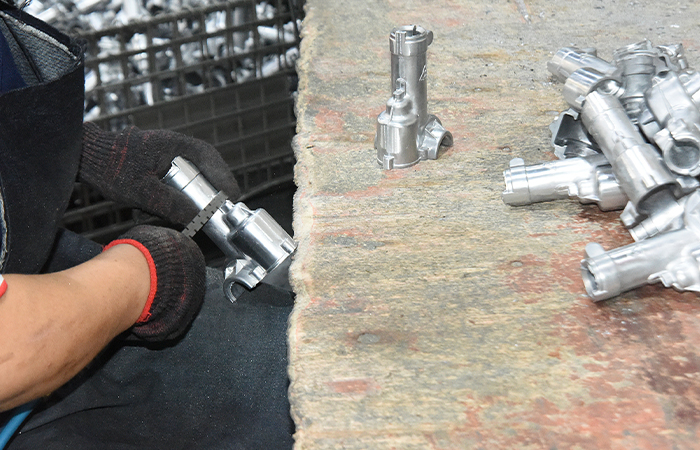
After the casting cools and is removed from its mold, it goes through a sequence most buyers never see. Runners and risers, the channels that fed molten metal into the cavity, are cut away and ground smooth. Flash, the thin fin of excess metal that seeps into mold seams, is trimmed by hand or with automated deburring equipment. Any casting destined for a visible, load-bearing joint typically goes through a secondary machining pass to true up mounting holes so that bolted connections sit flush rather than under uneven stress. Skipping or rushing this stage is a common way manufacturers cut cost, and it shows up later as slightly misaligned chair legs or a wobble that no amount of tightening fully resolves.
Why Wall Thickness Consistency Matters
A cast furniture leg is rarely a solid block of metal end to end; most designs are cored to leave a hollow center, both to save material and to reduce weight. The skill in mold design is keeping wall thickness even around that core. Uneven walls cool at different rates, and the thinner section solidifies first while the thicker section is still shrinking, which is a leading cause of internal micro-cracking that only becomes visible as a hairline fracture years later. Reputable furniture casters model wall thickness with simulation software before cutting a production die, specifically to avoid this failure mode.
Cast Aluminum vs Extruded Aluminum vs Wrought Iron
These three materials get confused constantly because they're all sold as "aluminum" or "metal" patio furniture. The differences show up in weight, price, and how the furniture ages.
| Material | Typical Weight (single chair) | Rust Risk | Design Detail | Relative Price |
|---|---|---|---|---|
| Cast Aluminum | 7 - 11 kg | None | High, intricate patterns possible | Mid to high |
| Extruded Aluminum | 3 - 5 kg | None | Clean lines, limited ornamentation | Low to mid |
| Wrought Iron | 14 - 20 kg | High without maintenance | High, but heavier detailing | Mid |
Extruded aluminum furniture is built from hollow tube stock that's bent and welded, which keeps it light and affordable but limits it to simpler geometric shapes. Wrought iron looks similar to cast aluminum at a glance, but iron oxidizes; even powder-coated iron frames will show rust at scratches and weld seams within a few years near coastlines or pools. Cast aluminum is the only one of the three that combines ornate detail with true corrosion immunity, which is why it dominates hospitality and resort furniture contracts where replacement cost matters.
There's also a structural difference in how each material fails over time. Extruded tube furniture tends to fail at the weld, since the heat of welding thins and weakens the aluminum right at the joint; a hard bump or years of flexing eventually cracks that seam. Wrought iron fails through material loss, as rust literally eats away cross-section until a leg or bracket can no longer bear load. Cast aluminum furniture, by contrast, is essentially one continuous piece of metal at every joint, so the weakest point is wherever casting quality (porosity, wall thickness) was already compromised at the factory rather than a point introduced afterward. That's precisely why sourcing from a caster with tight process controls matters more for cast aluminum than for welded alternatives.
Where Each Material Makes Sense
Extruded aluminum is a reasonable choice for lightweight balcony furniture, folding sets, or budget-conscious buyers who move furniture seasonally and value low weight over ornamentation. Wrought iron still appeals for indoor-outdoor transitional spaces such as covered porches where rain exposure is limited and its heavier, old-world aesthetic is the priority. Cast aluminum is the better fit for permanent installations exposed to full weather: poolside decks, waterfront patios, restaurant terraces, and any setting where furniture stays outside year-round without seasonal storage.
Alloy Grades: Why A356 and ADC12 Aren't the Same Metal
Not all cast aluminum is identical. The alloy used changes strength, corrosion resistance, and how well the surface accepts powder coat. Two grades dominate outdoor furniture production.
| Alloy | Casting Method Used | Silicon Content | Outdoor Suitability |
|---|---|---|---|
| A356 | Sand / gravity casting | ~7% | Excellent; higher strength, fewer micro-cracks under seasonal flexing |
| ADC12 | High-pressure die casting | ~10-12% | Good for thinner, modern frames; slightly more brittle at thin sections |
| 319 | Sand casting | ~6% | Solid mid-range option, common in mid-tier furniture lines |
A356 is generally regarded as the stronger choice for load-bearing joints such as armrests and chair-to-leg connections, since its lower silicon content gives it better ductility. Furniture using ADC12 through die casting isn't inferior, but it favors design flexibility and manufacturing speed over the last margin of structural toughness. If a listing mentions "T6 heat treatment," that's a good sign: it means the casting was solution heat-treated and aged to relieve internal stress, which reduces warping over years of temperature swings.
Recycled Content in Furniture-Grade Aluminum
A meaningful share of furniture-grade cast aluminum today is produced from recycled feedstock rather than primary smelted metal, since aluminum can be remelted repeatedly without losing its core mechanical properties. This matters for two reasons. First, remelting recycled aluminum uses a small fraction of the energy required to refine new aluminum from bauxite ore, which is why many manufacturers now list recycled content percentages on spec sheets. Second, it means an old, damaged cast aluminum chair isn't simply landfill waste; scrapyards accept cast aluminum readily, and a full furniture set typically has meaningful scrap value at the end of its service life, unlike composite resin furniture that has little recycling infrastructure behind it.
How Silicon Content Changes Machinability and Finish
Higher-silicon alloys like ADC12 flow more easily into thin, detailed die cavities, which is why die-cast furniture can achieve crisp, modern edges and slim profiles. The tradeoff is that higher silicon content makes the surface slightly harder to polish to a mirror finish, though this rarely matters for furniture since almost all outdoor pieces receive a powder-coated, matte, or textured surface rather than a polished one. Lower-silicon alloys like A356 machine more predictably, which is one reason they're preferred where a casting needs secondary drilling or threading for hardware, such as chair frames that bolt directly to table bases.
Powder Coating and Finish Technology That Actually Holds Up
The aluminum itself won't rust, but a poor finish still fails: chalking, fading, and chipping are the most common complaints in furniture reviews. A proper outdoor finish process runs through several stages before a single coat of color goes on.
- Degreasing and chemical etching to remove casting residue and oils
- Phosphate or chromate conversion coating to improve paint adhesion
- Electrostatic powder application, typically 60-100 microns thick
- Curing in an oven between 180°C and 200°C to fuse the powder into a hard shell
A curing temperature that's too low is the single biggest cause of premature peeling, since the powder never fully cross-links into the durable coating it's supposed to become. Furniture rated for UV stability with a polyester-based powder (rather than epoxy, which chalks quickly in direct sun) will keep its color for 8-10 years outdoors before any noticeable fading. Textured or "hammered" finishes also hide fine scratches better than gloss finishes, which is worth considering for furniture placed near pools or driveways where light abrasion is common.
Common Finish Options and Where They Work Best
| Finish Type | Surface Feel | Best Setting |
|---|---|---|
| Matte Powder Coat | Smooth, low sheen | Modern patios, minimal outdoor rooms |
| Textured / Hammered | Slightly rough, dimpled | Pool decks, high-traffic areas prone to scuffing |
| Antique / Aged Bronze | Layered, two-tone | Traditional gardens, earth-tone color schemes |
| Anodized | Hard, thin, metallic | Coastal settings needing extra corrosion margin at scratches |
Anodizing deserves a special mention because it isn't paint at all. It's an electrochemical process that thickens the aluminum's own natural oxide layer, producing a finish that's part of the metal rather than a coating sitting on top of it. This makes anodized furniture highly resistant to chipping, though the color range is narrower than powder coating and the process adds cost. It shows up most often on premium coastal or marine-adjacent furniture lines where salt spray is a daily reality rather than an occasional event.
UV Stabilizers and Color Retention
Pigments used in outdoor powder coatings are formulated with UV stabilizers that slow the breakdown of color-bearing molecules under sunlight. Darker colors such as charcoal and bronze tend to hold their appearance longer than bright reds or yellows, since the pigments used for vivid colors are generally more UV-sensitive at a molecular level. Buyers in high-UV regions such as the desert Southwest or high-altitude locations often get more visual longevity out of neutral, darker frame colors for this reason, independent of the underlying metal quality.
Durability by the Numbers: What to Expect Over Time
15-25 years typical service life for quality cast aluminum furniture
0% oxidation risk on the base metal itself, unlike steel or iron
~25% of the weight of comparable cast iron furniture, per unit volume
8-10 years before a quality polyester powder coat shows visible fading
These figures assume a properly cast frame with correctly cured powder coating; budget furniture using thin-wall die casting and unoptimized cure cycles can fall well short of these numbers, sometimes showing coating failure within two or three seasons. The gap between "cast aluminum" as a marketing term and cast aluminum as a properly engineered product is almost entirely in these two variables: alloy and finish process.
What's Changing in Cast Aluminum Furniture Design for 2026
Outdoor furniture styling shifts every few seasons, and cast aluminum's ability to hold fine detail means it tends to lead rather than follow these trends.
Antique and Aged Metal Finishes
Bronze, weathered brown, and antique brass finishes are pairing with earth-toned cushions this year, moving away from stark black-and-white contrast frames.
Mixed-Material Frames
Cast aluminum joints paired with woven rope seating or teak armrests are increasingly common, combining the structural strength of casting with softer tactile materials.
Deeper, Lounge-Style Seating
Frame profiles are getting lower and wider to support thicker cushions, a shift away from the slimmer dining-chair silhouettes that dominated the previous decade.
Recyclability as a Selling Point
Because cast aluminum furniture is close to fully recyclable at end of life, brands are leaning into this as a genuine sustainability claim rather than a vague one.
Modular, Reconfigurable Sectionals
Cast aluminum frames are increasingly designed as modular units that clip or bolt together, letting one collection form a loveseat, an L-shaped sectional, or a single lounge chair depending on the space.
Integrated Functionality
Side tables cast with built-in ice bins, fire pit tables with concealed propane tanks, and charging-port side tables show cast aluminum moving from purely decorative to multi-function outdoor furniture.
Common Cast Aluminum Furniture Types and What They're Suited For
Not every furniture type benefits from casting equally. Some pieces lean on cast aluminum for structural reasons, others primarily for decorative detail.
| Furniture Type | Why Cast Aluminum Fits | Typical Setting |
|---|---|---|
| Dining Sets | Stable, heavy base resists tipping during meals and wind gusts | Patios, restaurant terraces |
| Deep Seating Lounge Sets | Solid frame supports thick cushions without frame flex | Backyard living rooms, hotel lounges |
| Fire Pit Tables | Non-combustible, heat-tolerant metal near open flame | Evening gathering spaces |
| Bar Height Sets | Weight at the base counters top-heavy stool designs | Outdoor kitchens, pool bars |
| Daybeds and Chaise Lounges | Ornate detailing on visible frame sections without sacrificing strength | Poolside, resort cabanas |
| Planters and Garden Accents | Decorative casting detail holds up to constant soil moisture contact | Gardens, entryways |
Dining chairs and lounge frames are where casting quality matters most, since these pieces see the most repeated stress from sitting, shifting, and stacking. Decorative accents like planters have far more tolerance for minor casting imperfections since they carry no structural load beyond their own weight.
Matching Cast Aluminum Furniture to Your Climate
Cast aluminum performs well across nearly all outdoor climates, but a few environmental factors change what to prioritize when specifying a finish or hardware package.
Coastal and High-Salinity Environments
Salt air accelerates corrosion on almost every material except aluminum and stainless steel, but it can still degrade hardware and attack any point where the powder coat has been chipped down to bare metal. Coastal buyers should prioritize stainless steel fasteners, a thicker powder coat or anodized finish, and more frequent rinsing to clear salt residue before it accumulates in seams and joints.
Desert and High-UV Regions
Intense, sustained UV exposure is harder on cushion fabric and coating pigment than on the aluminum itself. Buyers in these regions get the most value from Sunbrella-grade or solution-dyed cushion fabrics and darker, UV-stable frame colors, alongside shade structures or covers during the hottest, sunniest stretches of the year.
Cold Climates with Freeze-Thaw Cycles
Aluminum doesn't absorb water the way porous materials do, so freeze-thaw cycling rarely damages the metal itself. The bigger risk is trapped moisture inside cushions or under seat webbing freezing and expanding, which is a cushion and upholstery concern rather than a frame concern. Storing cushions indoors over winter, even while leaving the metal frame outside under a cover, extends the useful life of the softer components considerably.
Humid, High-Rainfall Climates
Consistent moisture without salt is actually one of the gentler environments for cast aluminum, since there's no chloride acceleration of any coating degradation. The main consideration here is drainage: furniture with weep holes or gapped slats in seating surfaces avoids standing water that can otherwise encourage mildew growth on cushions and fabric rather than on the metal frame.
Real Maintenance: What Cast Aluminum Furniture Actually Needs
Cast aluminum is often sold as "maintenance-free," which oversells it slightly. The metal needs nothing, but the finish and hardware benefit from basic upkeep.
- Wash with mild soap and water every 4-6 weeks during the outdoor season to remove pollen, salt, and grit before it abrades the coating.
- Check stainless steel or aluminum fasteners twice a year; mixed-metal hardware can gall or loosen with seasonal temperature swings.
- Touch up any visible chip in the powder coat promptly with a matched touch-up paint to stop moisture from reaching the bare metal underneath the coating.
- Use breathable, weather-resistant covers during off-season storage rather than sealed plastic, which traps condensation against the finish.
- Avoid stacking unpadded frames directly on top of each other, since repeated metal-on-metal contact will eventually wear through the coating at contact points.
None of this requires special tools or professional service. Furniture that's properly cast and properly coated genuinely needs less attention than teak, which requires annual oiling, or steel, which needs rust inspection every season.
What to Do If You Spot Early Corrosion
True aluminum oxidation shows up as a dull, white-ish, powdery bloom rather than the reddish-orange rust seen on iron. It's typically cosmetic and can be buffed away with a plastic scouring pad and mild aluminum cleaner. If you see reddish rust streaks on a cast aluminum piece, that's almost always coming from a steel fastener, screw, or hidden internal bracket rather than the aluminum casting itself, and swapping that hardware for stainless steel resolves the issue at the source.
Cost Per Year: Why the Higher Sticker Price Often Wins
Cast aluminum sets typically cost more upfront than resin wicker or basic steel sets, but the comparison changes once you calculate cost per year of usable life rather than sticker price alone.
| Material | Approx. Upfront Cost | Expected Lifespan | Approx. Cost / Year |
|---|---|---|---|
| Cast Aluminum | Higher | 15-25 years | Lowest |
| Resin Wicker | Lower | 4-8 years | Moderate |
| Basic Steel | Lowest | 2-5 years | High once rust replacement is factored in |
Mass-market outdoor furniture frequently fails structurally within two to three years, which means it gets replaced two, three, or four times over the same period a single cast aluminum set stays in service. For hospitality venues, rental properties, or anyone furnishing a permanent patio rather than a temporary rental, this math consistently favors cast aluminum despite the higher initial invoice.
Warranty Terms Worth Checking
Warranty length is one of the more reliable proxies for how confident a manufacturer is in its own casting and coating process. A frame warranty of 10 years or longer generally signals the maker trusts its alloy choice and heat treatment, while a warranty limited to one or two years, or one that separates "frame" from "finish" coverage, is worth reading closely. Finish warranties in particular often exclude coastal or high-chlorine pool environments, so buyers in those settings should confirm coverage applies to their specific conditions before purchasing rather than after a finish issue appears.
Resale and Depreciation
Because cast aluminum furniture doesn't structurally fail the way resin or steel furniture does, it holds resale value noticeably better in secondhand and estate-sale markets. A well-maintained cast aluminum dining set a decade old, with only minor touch-up needed on the finish, still functions as intended, whereas a decade-old resin wicker set has typically already been replaced due to UV brittleness in the woven material.
A Practical Checklist Before You Buy
Use these points to judge quality when comparing listings or showroom samples, especially for pieces you can't inspect the underside of before shipping.
- Ask which alloy is used (A356, ADC12, or 319) and which casting method produced it
- Confirm the piece is T6 heat-treated if it's a load-bearing frame such as a dining chair or bench
- Check the powder coat type: polyester for UV stability, not a basic epoxy blend
- Look at the underside of a sample piece for grinding marks, which indicate excess porosity was filed away
- Verify hardware material; stainless steel screws resist galvanic corrosion against aluminum better than plain steel
- Compare wall thickness at joints; thin die-cast sections around 2-3mm are more prone to long-term fatigue than thicker sand-cast joints
Frequently Asked Questions
Does cast aluminum outdoor furniture rust?
No. Aluminum forms a thin, stable oxide layer on its surface rather than rusting, which is why cast aluminum stays structurally sound in humid, coastal, or poolside environments where iron and steel furniture eventually corrode.
Is cast aluminum furniture heavy enough to stay put in wind?
Yes, relative to hollow extruded aluminum. A solid cast chair typically weighs 7-11 kg, which is enough to resist tipping in moderate wind, though very exposed rooftop or coastal locations may still benefit from weighted bases on larger pieces like umbrellas.
Can cast aluminum furniture stay outside all winter?
The metal and finish can generally tolerate freeze-thaw cycles without damage, but using a breathable cover reduces grime buildup and protects cushions or fabric components that aren't part of the metal frame itself.
What's the difference between cast and wrought aluminum?
Cast aluminum is poured into a mold as molten metal and solidifies into its final shape, allowing intricate detail. Wrought aluminum is mechanically shaped from solid stock through processes like extrusion or forging, generally producing simpler, more geometric forms.
Why does cast aluminum furniture cost more than resin or basic metal sets?
The aluminum casting process, alloy selection, and multi-stage powder coating all add labor and material cost compared to molded resin or simple welded steel tube furniture. That upfront cost is generally offset by a service life several times longer.
How do I clean cast aluminum furniture safely?
Mild dish soap, warm water, and a soft brush or cloth are sufficient for routine cleaning. Avoid abrasive scouring pads or strong solvents, which can dull or scratch the powder-coated surface over repeated use.
Is cast aluminum furniture safe to use around a pool with chlorine?
Yes, aluminum itself tolerates chlorinated water splashes well, but repeated concentrated exposure can gradually dull a powder coat faster than fresh water would. Rinsing furniture near pools periodically and choosing a finish rated for pool-adjacent use extends coating life in these settings.
Can scratches in the powder coat be repaired at home?
Small chips can be touched up with a matched paint pen or touch-up bottle sold by most furniture manufacturers, applied after cleaning and lightly sanding the chipped edge. Larger areas of coating failure typically need professional stripping and recoating to restore full protection.
Does cast aluminum furniture get too hot to sit on in direct sun?
Bare metal armrests can get warm in direct summer sun, similar to any dark metal surface, though cast aluminum's lower thermal mass compared to solid steel or stone means it cools down faster once shaded. Cushioned seating surfaces largely avoid this issue since fabric doesn't retain heat the way exposed metal does.
How much does a cast aluminum furniture set typically weigh for shipping?
A six-piece dining set generally falls in the 45-70 kg range depending on table size and chair count, while a full deep-seating lounge set with a sofa, loveseat, and two chairs can run higher due to larger frame sections. This weight is one reason freight shipping, rather than standard parcel delivery, is common for full sets.
What's the difference between cast aluminum and cast iron furniture?
Both are produced through a similar molten-pour casting process, but cast iron is significantly heavier and, unlike aluminum, corrodes readily without diligent maintenance. Cast iron furniture tends to appear in antique or vintage-style garden pieces where its extra weight and traditional look are the draw, despite the added rust risk.