 LANGUAGE
  English
 русский
 Español

Content
Direct Answer: Is Die Casting Strong?
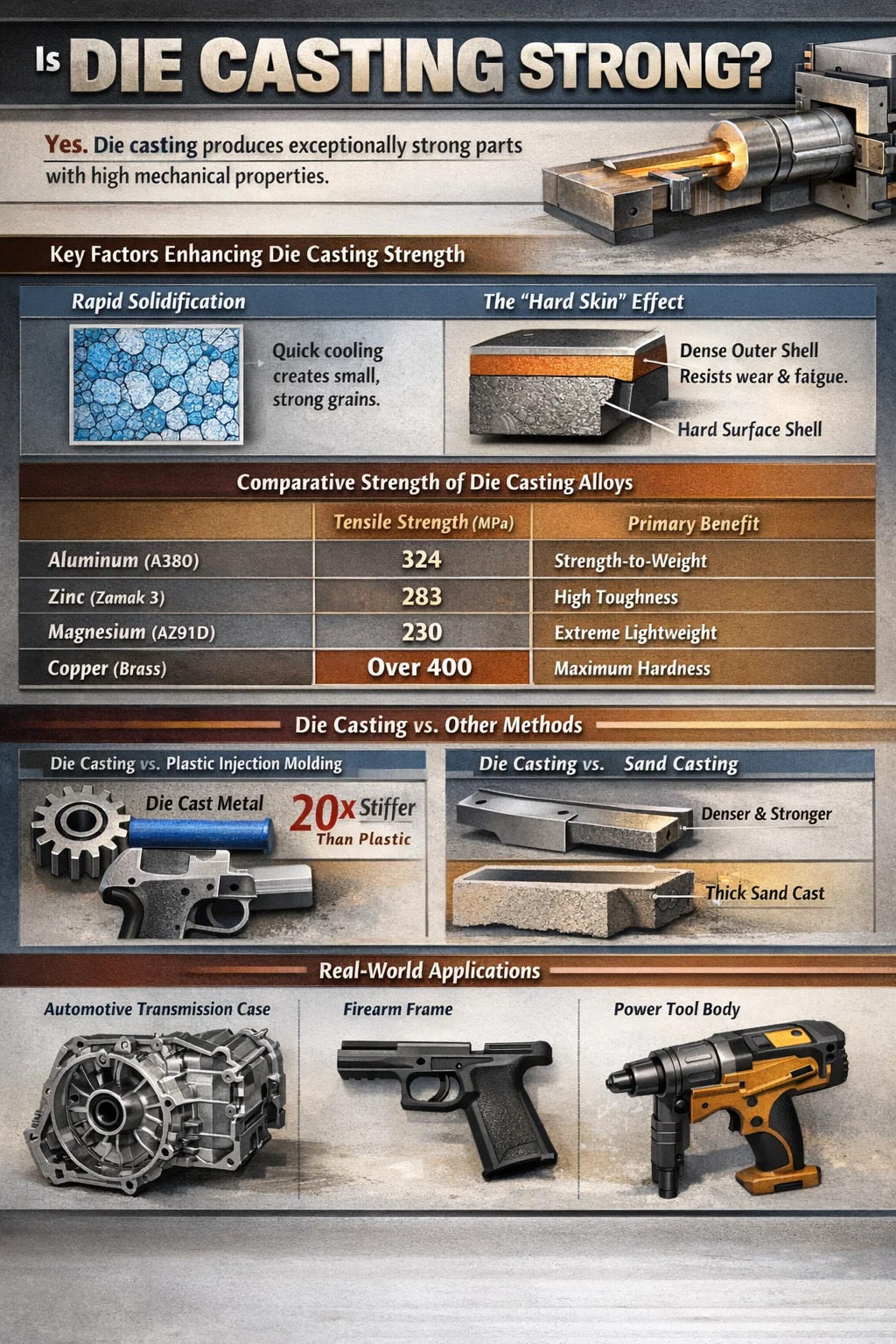
Yes, die casting produces exceptionally strong parts that often exceed the strength of plastic injection molding and rival the structural integrity of some forged components. Because the process involves forcing molten metal into a mold under high pressure, the resulting metal structure is dense and fine-grained, which significantly boosts its mechanical properties.
The strength of a die casting component is not just about the metal used; it is a result of the rapid cooling process which creates a "skin" on the part. This outer layer is incredibly hard and tension-resistant, making the part capable of withstanding heavy loads, high vibration, and extreme impact without deforming or breaking.
Factors That Contribute to Die Casting Strength
To understand why die casting is favored in demanding industries like automotive and aerospace, we must look at the technical factors that build its "strength" profile.
Rapid Solidification and Grain Structure
When the molten alloy hits the steel mold, it cools almost instantly. This rapid cooling prevents large, weak crystals from forming. Instead, it creates a fine-grained microstructure. In metallurgy, finer grains generally equate to higher yield strength and better toughness.
The "Hard Skin" Effect
As the metal freezes against the cold die surface, the outer shell becomes much denser than the core. This "chilled skin" acts like a natural reinforcement. For many die casting parts, this skin provides the majority of the component's fatigue resistance, which is why engineers avoid machining away too much of the surface.
Comparative Strength of Common Die Casting Alloys
Not all die casting metals are the same. The choice of alloy determines whether the part is optimized for impact, weight, or pure tensile load.
| Alloy Family | Tensile Strength (MPa) | Impact Strength | Primary Benefit |
|---|---|---|---|
| Aluminum (A380) | 324 | Moderate | Strength-to-weight ratio |
| Zinc (Zamak 3) | 283 | High | Toughness and ductility |
| Magnesium (AZ91D) | 230 | Moderate | Extreme lightweight strength |
| Copper (Brass) | Over 400 | Very High | Maximum hardness/wear |
Die Casting Strength vs. Other Methods
When comparing die casting to other manufacturing techniques, the "strength" is often measured by how the part behaves under stress.
Die Casting vs. Sand Casting
Sand casting uses gravity to fill molds, leading to slower cooling and more internal porosity. Die casting uses pressure to pack the metal tight. Consequently, a die-cast part can be much thinner while maintaining the same structural load capacity as a thick, heavy sand-cast part.
Die Casting vs. Plastic Injection Molding
Even the strongest engineering plastics cannot match the modulus of elasticity of die-cast metals. A die-cast aluminum part is roughly 20 to 30 times stiffer than a similar plastic part. This stiffness is vital for engine components or power tool housings where flex can lead to mechanical failure.
Common Challenges Affecting Strength
While die casting is inherently strong, certain manufacturing flaws can compromise its integrity. Constructive quality control is necessary to avoid these pitfalls.
- Porosity: Tiny gas bubbles trapped during the high-speed injection can create weak spots. Vacuum die casting or squeeze casting techniques are often used to pull air out and ensure a solid, stronger part.
- Cold Shuts: If the metal begins to cool before it completely fills the mold, a "seam" or cold shut forms. This acts like a pre-existing crack and significantly lowers the part's impact resistance.
- Wall Thickness Design: Paradoxically, making a die casting part too thick can make it weaker relative to its weight. Modern engineering favors thin, ribbed designs which maximize the use of the "strong skin" and minimize internal porosity.
Real-World Examples of High-Strength Die Castings
The strength of die casting is proven daily in some of the most stressful environments imaginable:
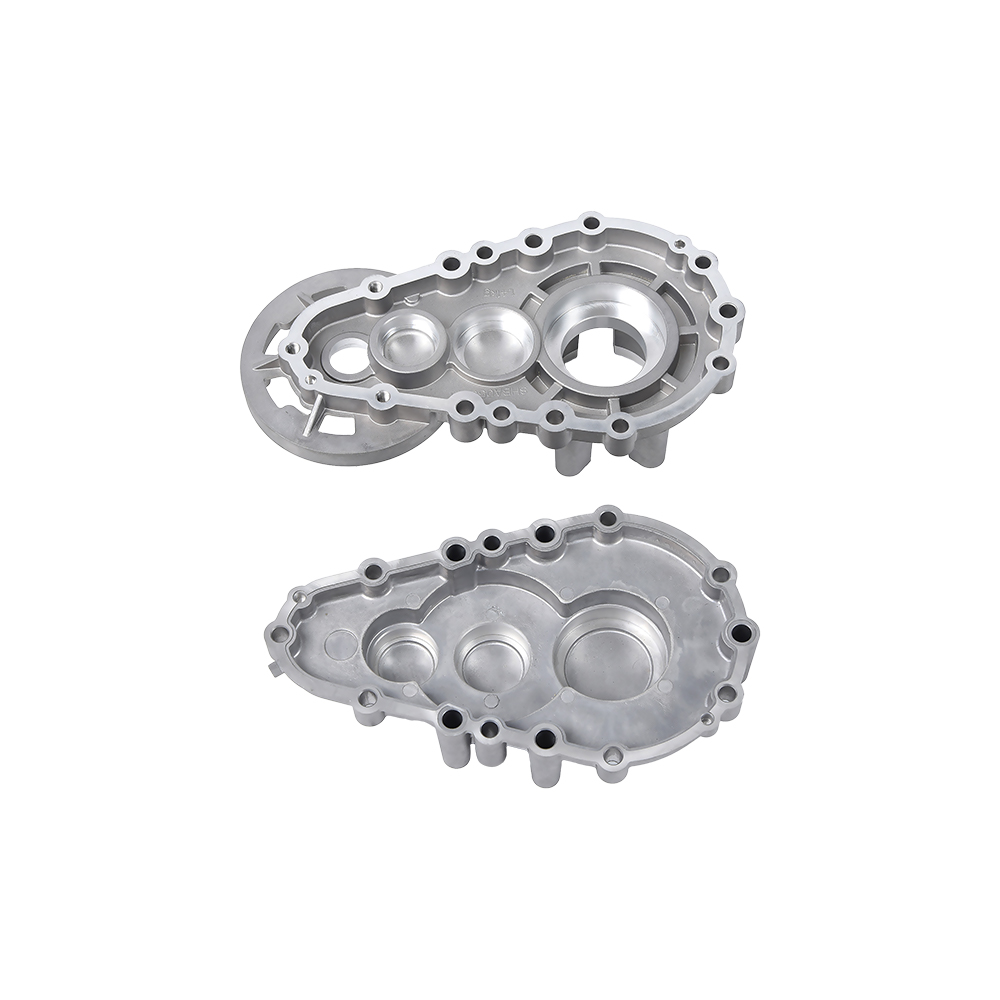
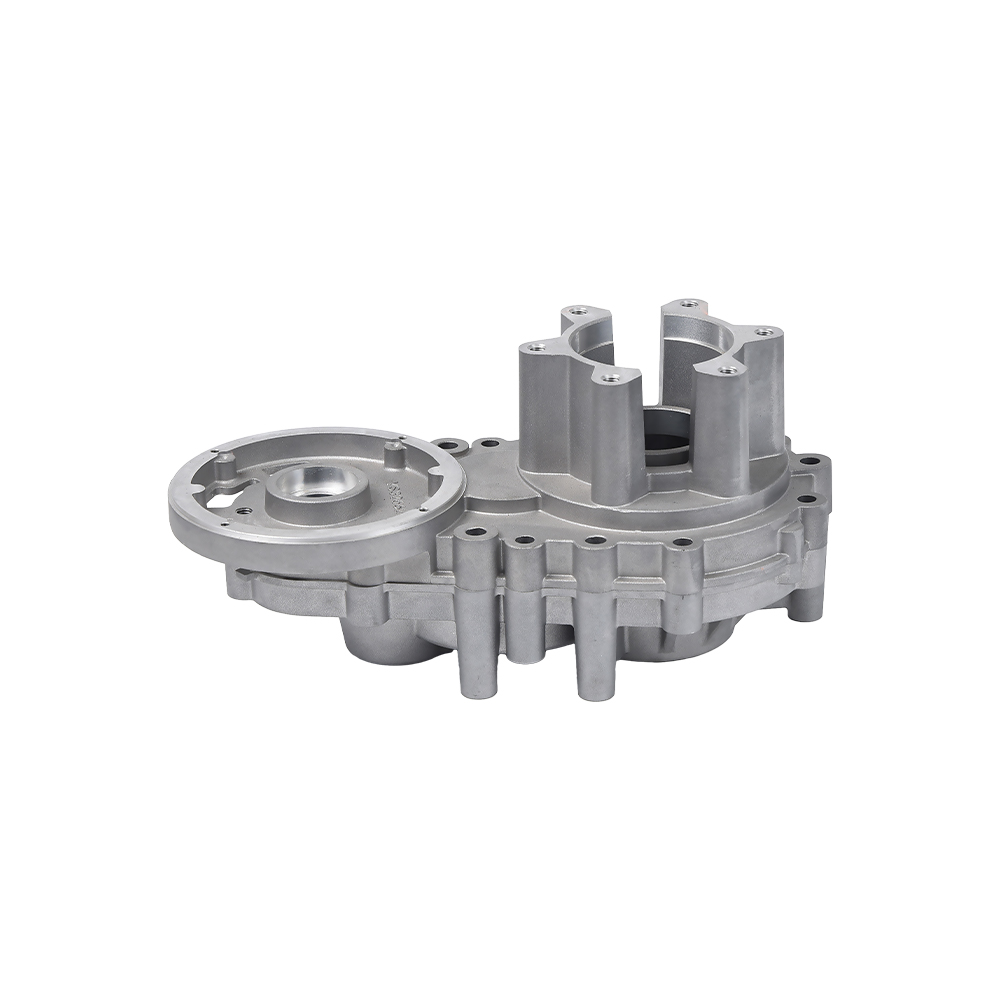
- Automotive Transmission Cases: These must hold heavy gears in perfect alignment while subjected to massive torque and constant heat cycles.
- Firearm Frames: Many modern handguns use die cast aluminum or zinc frames because they can withstand the explosive force of repeated firing.
- Construction Tools: The bodies of professional-grade nail guns and jackhammers are almost always made via die casting to absorb the constant recoil and drops on concrete.
In summary, if your project requires a part that is stiff, durable, and resistant to fatigue, die casting is one of the strongest manufacturing options available. By selecting the right alloy and optimizing the part geometry, you can create components that last a lifetime under heavy use.